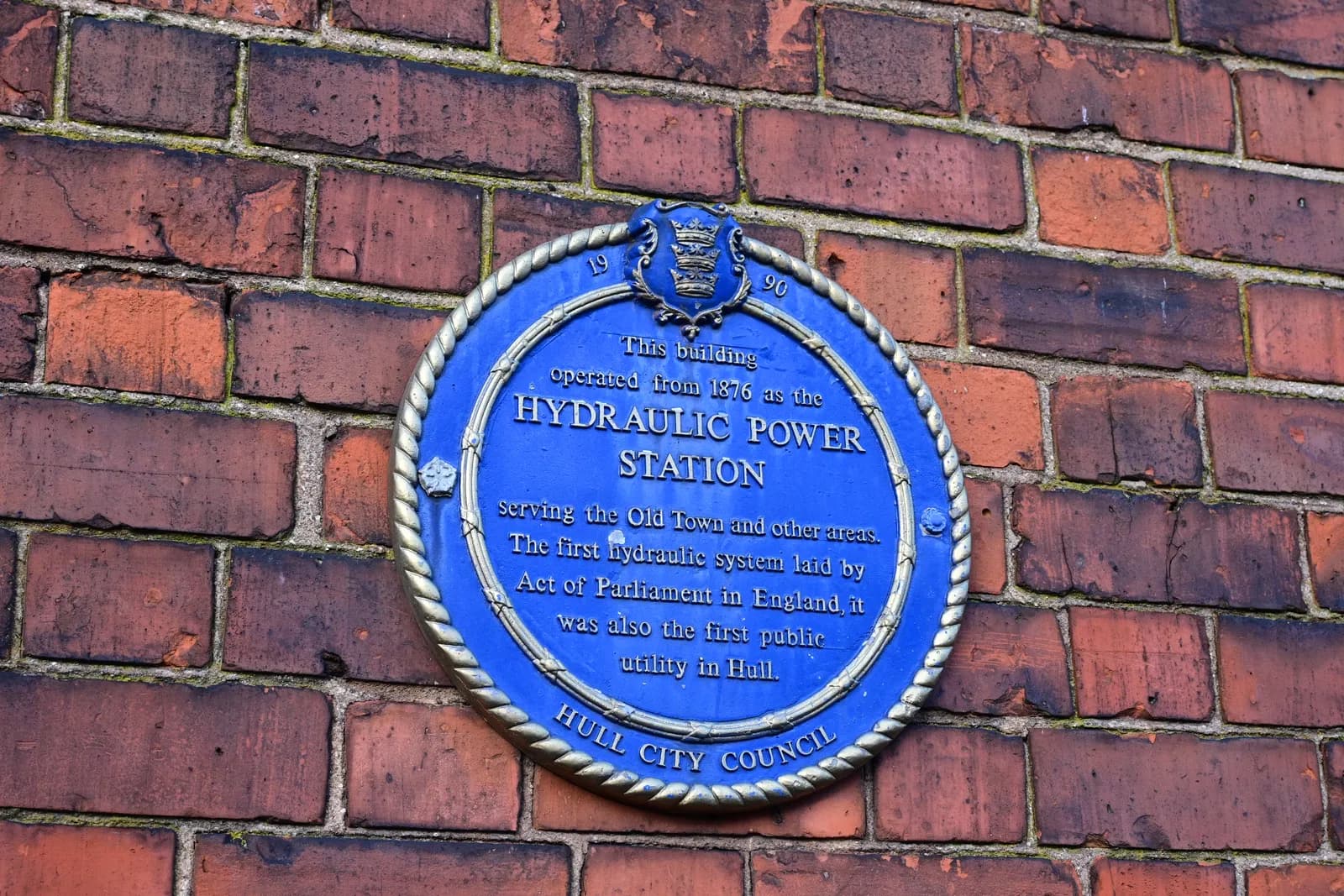
Tucked away on a quiet corner in Bankside stands a weathered brick building that once represented the cutting edge of Victorian engineering. The former Hull Hydraulic Power Station, now operating as a modest car workshop, harbours a remarkable claim to fame: it was the first hydraulic power system laid by Act of Parliament in England and Hull's very first public utility.
A Pioneering Installation
The station opened in 1876 at the corner of Machell Street and Catherine Street, serving as the beating heart of Hull's industrial water supply network. According to a Hull City Council heritage plaque installed in 1990 and records held at the Carnegie Heritage Centre, this unassuming structure was the first of its kind in the country to be established under parliamentary authority.
The system supplied water under pressure to Hull's Old Town and several of the city's bustling docks, powering machinery, cranes, and warehouse equipment during the height of the city's maritime prosperity. For residents and businesses alike, it represented a revolutionary step forward in public infrastructure.
From Public Utility to Private Workshop
The station continued its vital work for more than seven decades, finally ceasing operations in 1947. Its closure came not from obsolescence alone, but from the devastating impact of the Second World War. The Hull Hydraulic Power Company, which operated the facility, suffered significant damage to its infrastructure during the conflict, making continued operation unviable.
Today, the building stands as a tangible link to Hull's industrial past, its exterior largely unchanged despite its change of purpose. The heritage plaque, installed nearly thirty-five years ago, serves as one of the few visible reminders of the site's historical importance.
Heritage Amidst Regeneration
The Hydraulic Power Station sits within a city that has undergone dramatic transformation. Nearby, the Graving Dock—once used for sealing ship hulls—now functions as a marina lined with modern apartment blocks, symbolising Hull's shift from industrial powerhouse to regenerated waterfront destination.
Humber Street, a short distance from the former power station, has similarly experienced renewal. The street recently welcomed the relocation of a long-established Chinese Laundry business, reflecting the area's continued evolution whilst maintaining connections to its commercial heritage.
A Heritage Trail Waiting to Happen
For Hull residents interested in the city's industrial archaeology, the Hydraulic Power Station offers an accessible starting point. The building exemplifies the kind of overlooked heritage asset that dots the city—structures that pass unnoticed in daily life yet hold significant stories about Hull's development as a major port and engineering centre.
The station's pioneering status as England's first parliamentary-sanctioned hydraulic system places Hull firmly within the national narrative of Victorian engineering innovation. Whilst the city's maritime museums and The Deep aquarium attract visitors from across the region, sites like the Hydraulic Power Station represent the working infrastructure that made Hull's commercial success possible.
Preservationists and local historians have long argued for greater recognition of such sites. The heritage plaque, whilst welcome, represents minimal interpretation for a building of such national significance. As Hull continues to develop its cultural and tourism offerings, there remains scope to weave these industrial landmarks into a more comprehensive heritage trail.